Navigating Your First Orange County Home Purchase Without Costly Surprises
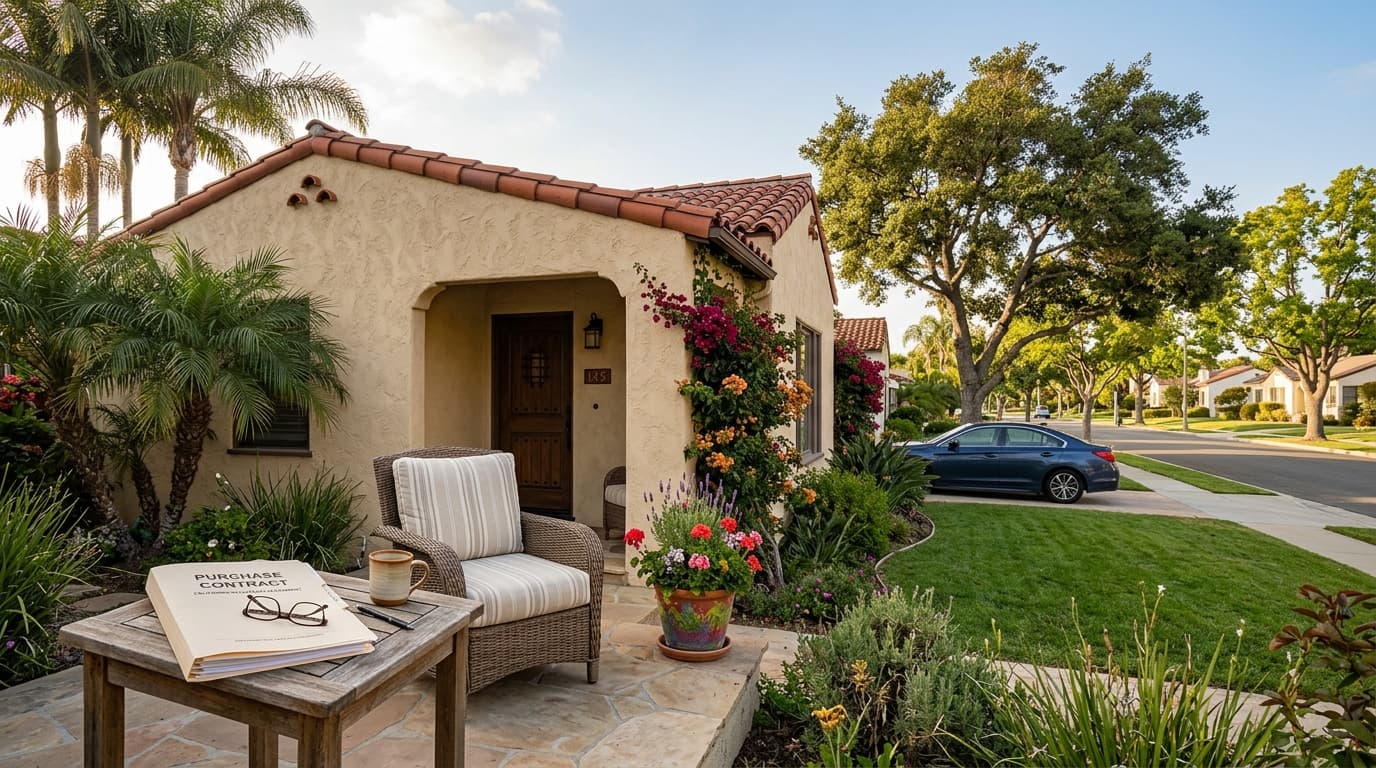
A step-by-step guide for first-time buyers in Santa Ana and Westminster: how contracts work, how earnest money deposits are protected, and how unified broker and lender advice prevents expensive surprises.
Buying your first home in Orange County feels exciting right up until the paperwork arrives. A purchase contract has deadlines, deposits, and contingencies, and missing one of them can cost real money. This guide walks through the mechanics so nothing catches you off guard.
How the purchase contract actually works
Once your offer is accepted, the clock starts. In California, the residential purchase agreement sets specific windows for inspections, loan approval, appraisal, and disclosures. Each window is a contingency, a built-in exit that protects your deposit if something goes wrong.
Here is the typical sequence for a first-time buyer in Santa Ana or Westminster:
- Offer accepted and the contract is signed by both sides.
- Earnest money is delivered to escrow, usually within a few business days.
- Inspection, disclosure review, and appraisal windows run in parallel.
- Loan approval is finalized with the lender's underwriter.
- Contingencies are removed in writing, then funds are wired and escrow closes.
The key point: every step has a date, and your rights usually depend on acting before that date passes.
Demystifying the earnest money deposit
The earnest money deposit is the good-faith money you place into escrow after acceptance. In Orange County, deposits commonly fall in the $10,000 to $20,000 range, depending on the price and how competitive the home is. The deposit is not an extra cost. It is credited toward your down payment or closing costs at the end.
What makes it risky is the contract language. If you remove a contingency and then fail to perform, the seller may be entitled to keep the deposit. That is why earnest money deposit protection matters so much:
- Know the exact calendar day each contingency expires.
- Never let a contingency lapse by accident because a lender is slow to respond.
- Keep written confirmation of every removal and extension.
- Confirm that funds are held by a licensed escrow company, not sent to a person.
What "The Costly Misery" looks like
We use the phrase The Costly Misery for a pattern we see too often: an escrow that looks healthy and then collapses around day 21. The causes are usually unverified lender conditions, a miscalculated debt-to-income ratio, or an appraisal issue nobody planned for. By then the buyer has paid for inspections and appraisal, locked a rate, and may have a deposit at risk.
Most of these failures trace back to a siloed process. The real estate agent writes the offer based on a quick pre-qualification from a lender who never reviewed documents. Nobody checked the full file until the contract was already running.
The unified Broker and MLO approach
Troy Huynh is licensed as both a California real estate broker and a mortgage loan originator. That lets one professional handle both halves of the deal. Before you make an offer, we review your W-2s, tax returns, bank statements, and debts, and structure the loan so the numbers are verified rather than assumed.
For you, this means:
- Offers backed by a documented financial picture, not a guess.
- Contingency timelines built around how long your loan actually needs.
- One point of accountability when something changes mid-escrow.
- Fewer surprises at the appraisal and underwriting stages, because they were anticipated.
Verification up front does not guarantee approval, since every loan depends on the lender's final underwriting. It does reduce the chance that a fixable problem is discovered at the worst possible time.
Your next steps
Before you tour a single home, decide what monthly payment you are comfortable with, then work backward to a price range. For example, a buyer who wants to stay near a target payment should test several price points, down payment amounts, and rates side by side rather than relying on a single estimate.
Start by using the Payment Calculator to see how price, down payment, and rate change your monthly cost. Then reach out so we can verify your documents and map out a timeline for your Santa Ana or Westminster search.
This article is for educational purposes only and is not legal, tax, or financial advice. Rates, programs, and rules change; verify current details before acting.
Troy Huynh, Broker DRE #01889229 | NMLS #344740, Global Estate Hub LLC
- #first time homebuyer Orange County
- #buying home Santa Ana
- #earnest money deposit protection
- #Westminster homes
- #purchase contract
- #escrow timeline
Educational content only. This is not legal, tax, or financial advice and is not an offer or commitment to lend. All loans are subject to credit and underwriting approval. Equal Housing Opportunity.
Have a question about your own move or financing? Troy will follow up personally.
Payment CalculatorCompare loan options